Block 04 · 05
Macro and the Key Rate
The Fed's rate, inflation, and how decisions in Washington move the market.
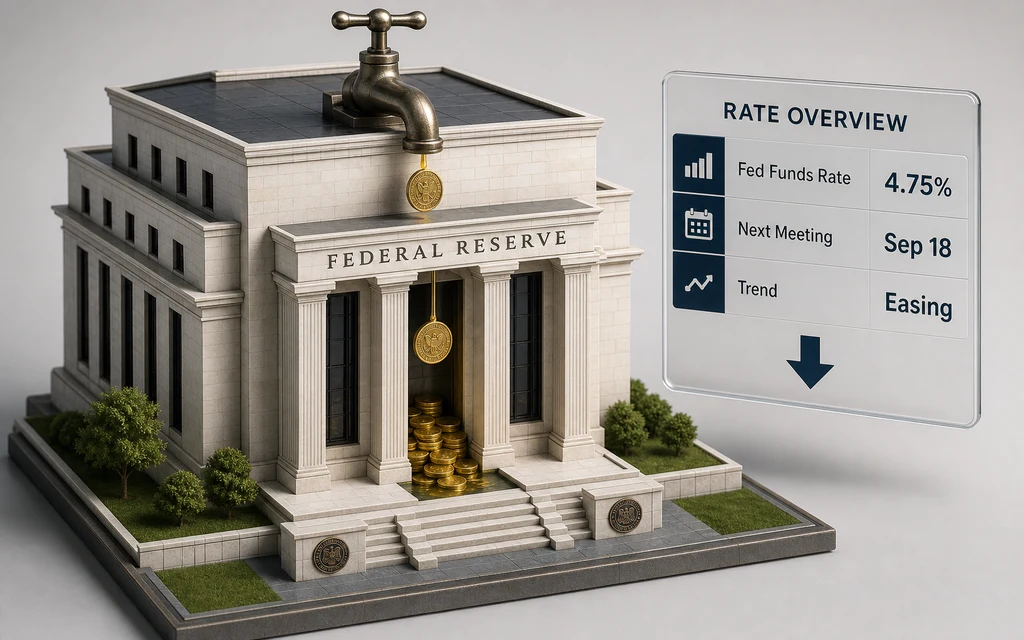
The key rate is the price of money in the economy. Move the slider and watch the chain of consequences change.
- 01
The cost of borrowing stays where it is
- 02
Company and consumer plans do not shift sharply
- 03
Economic activity stays in its current mode
- 04
The market leans on other factors
The rate does not set market direction directly. It changes the price of money, and the market reprices companies on its own — sometimes fast, sometimes late, sometimes against expectations.
Educational example. Not investment advice and not a forecast.
In plain words
Watch how a single decision ripples through the entire economy. The Fed raises the rate from 0.25% to 5.5%. A few months later, the yield on two-year US Treasury notes moves from 0.2% to 5%, and any investor can lock in that rate for two years with a simple purchase. At the same time, mortgage rates in the US climb from around 3% to 7%, and companies start scrutinizing debt-financed projects more closely. One number in a regulator's decision changes yields across the entire market — from government bonds to corporate loans. That's exactly why the Fed meeting date is on every professional's calendar.
Macroeconomics covers the general conditions the entire market operates under. The main lever here is 's rate, set by the US central bank.
What the rate is. It's the cost of money in the economy. It determines the rate at which banks lend to businesses, the yield on new bonds, and how expensive it is for companies to fund growth.
How it works. When the rate is higher, money is more expensive, bond yields rise, and fixed-income instruments become more attractive. When the rate is lower, money is cheaper, it's more profitable for companies to borrow and expand, which supports business growth and valuations.
Why it's useful to know. The calendar of Fed meetings and macro data releases is known a year in advance. Inflation, employment, GDP, retail sales — all these figures come out on scheduled dates. A professional knows ahead of time when the market will get new input and plans actions around that calendar.
Try it yourself
Cash sitting at home: what inflation does to it
Inflation — 5% a year (US data)
$0
After 5 years the same $10,000 buys less: purchasing power drops by $2,165.
Inflation compounds in reverse: money left standing still loses purchasing power every year.
Common beginner mistakes
- Focusing only on the company while ignoring the cost of money in the economy
- Not knowing the date of the next Fed meeting — it's known in advance
- Judging bond yields without accounting for the current rate level
- Skipping the CPI release: inflation drives the regulator's next decisions